
Interview With Ms. Luccock
In this course, we learn about Indigenous history, but we mainly focus on the stories, literature, art, and music of the First Peoples. It’s important to understand their stories, beliefs, and culture so we can contribute to truth and reconciliation. Some students take it because it’s mandatory, but many others choose it because they genuinely want to learn more about Indigenous culture and history. We start by exploring identity, which is a very important theme in Indigenous cultures. Students create identity collages to represent who they are. Then we read stories such as one about an Indigenous man who rediscovers and takes pride in his heritage. Students also complete a research project on topics such as the Indian Act, residential schools, and truth and reconciliation, and they present their findings to the class. Later in the semester, we study the novel Moon of the Crusted Snow and explore Indigenous poetry and possibly some related art projects.
Students do research projects, read and analyze short stories, write essays, and watch films. We may include creative projects too, like art pieces connected to Indigenous themes. There are a variety of novels and stories studied throughout the course. They also study a full novel and some poetry. We use several books written by Indigenous authors to give students a wide range of perspectives and voices. English First Peoples 12 is actually a separate course from regular English 12, but some traditional English courses also include Indigenous material. The difference is that this course focuses completely on Indigenous voices, stories, and experiences. Many students are learning about the difficult history of residential schools and developing a deeper appreciation for what Indigenous people have gone through. It’s meaningful and eye-opening for them. I would say this class in more oral and media-based. We include films, discussions, and visual materials alongside the traditional reading and writing elements. Honestly, all of it is fascinating.
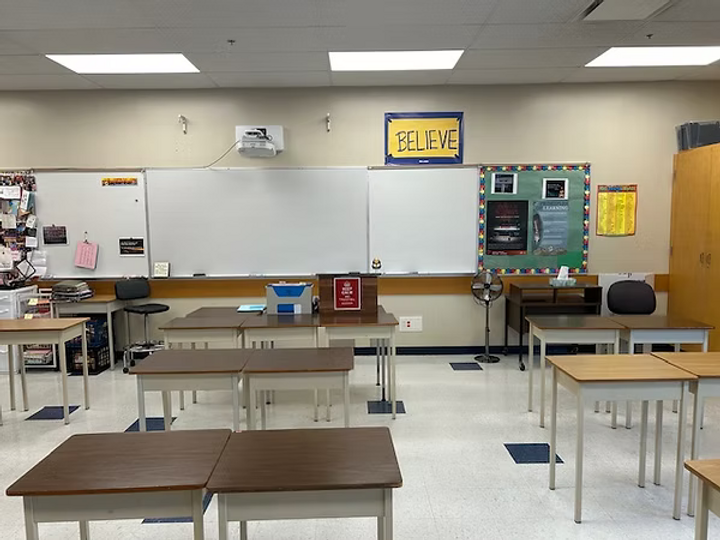
This is Ms. Luccock's classroom
Learning about Indigenous history, culture, art, and music, and exploring their stories and artists, makes every part of the course interesting and powerful. We’ve also watched the movie Beans, which follows a young Mohawk girl during the Oka Crisis, a conflict between the Mohawk people and the Quebec government. This is my first time teaching English First Peoples 12, but I’ve taught other English grades for many years. I use a mix of direct instruction and group work. Students often break into groups to research or analyze stories. We do a lot of writing, including essays and creative pieces, as well as quizzes and tests, so it’s a mix of traditional teaching and project-based learning. Students are required to take at least one Indigenous-focused course to graduate. They can choose to take it in English or Social Studies, they don’t need both. So yes, there has been an increase in enrollment.